Only one week remains until the start of the 13th edition of the Peace Race for Under-23 riders. This year, the traditional event will be held for the first time as part of the Europe Tour 2.2U calendar. Alongside national teams, development squads of professional teams will also line up at the start, raising the sporting level of the race once again. The four stages, set in the attractive scenery of the Jeseníky mountains, will take place from May 28–31 and cover a total of 530.8 kilometres with 9,454 metres of elevation gain.
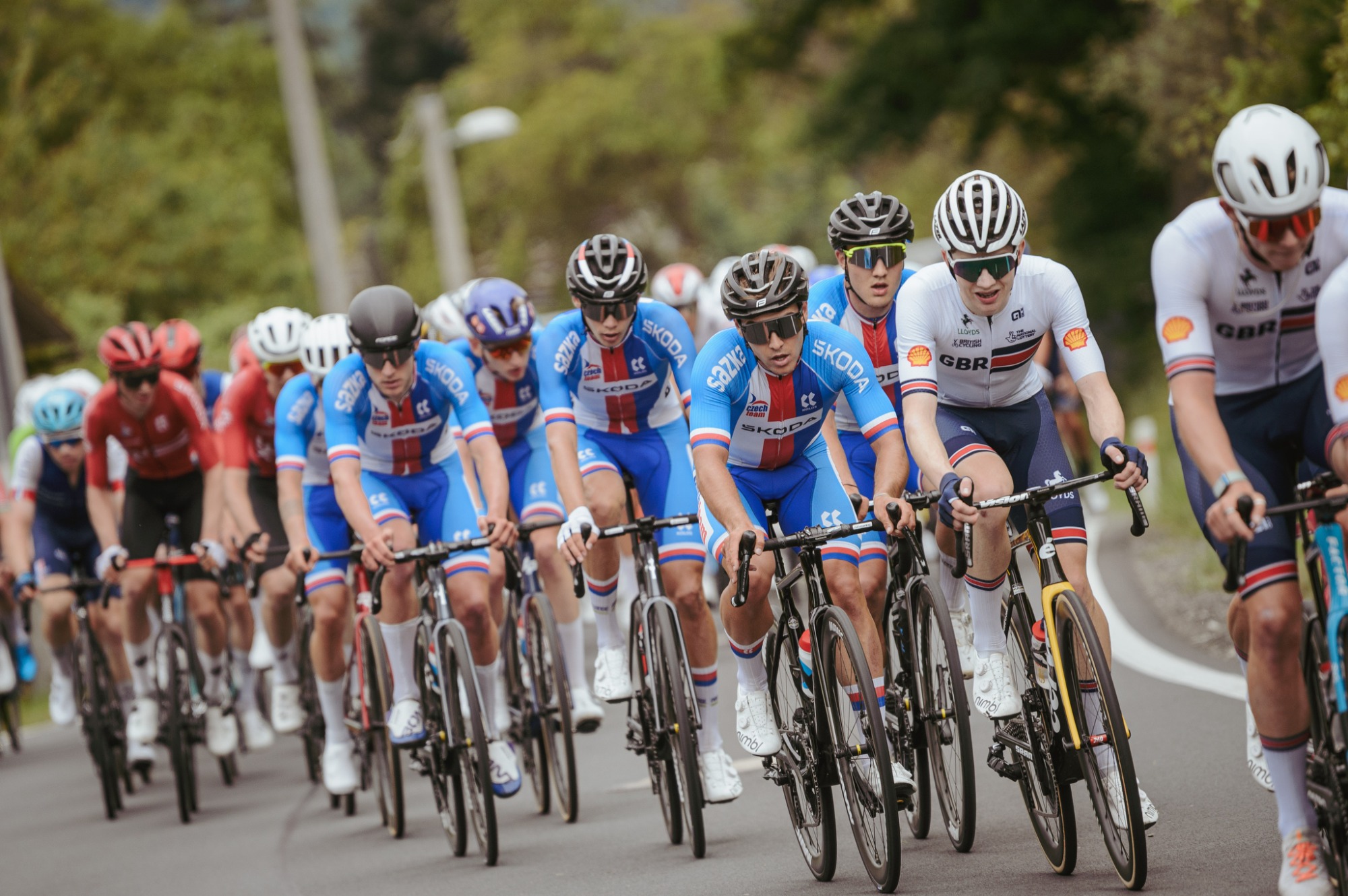
“The Peace Race once again confirms its place among the most important events for Under-23 riders in Europe. The combination of national teams and development squads gives this year’s edition exceptional sporting quality and offers fans the opportunity to see future stars of the world peloton in one place. We are delighted to return to the landscapes that give the race its unique character, and we believe it will provide a strong sporting experience for the Olomouc and Moravian-Silesian regions,” says Peace Race president Robert Kolář.
The peloton will feature 14 foreign national teams alongside the Czech national team, giving the event a broad and highly competitive international field. Among them will be promising young riders from traditional cycling nations such as Belgium, Spain, Denmark and Slovenia, all countries with a strong track record of developing world-class talent. The new UCI Europe Tour 2.2U status has helped attract an even stronger mix of riders and nations, further enhancing the sporting value of the race.
A major role will also be played by eight development teams holding Continental licences. Among the headline names are the U23 talent squad of Switzerland’s Tudor Pro Cycling Team and Australia’s Hagens Berman Jayco. The race will also welcome Norway’s Drali-Repsol and Hungary’s United Shipping. Half of the development teams on the start list race under a Czech licence, including Kasper Crypto4me, adding another interesting layer to a field that now combines national selections with some of the most ambitious young squads in international cycling.
This year’s route is designed to test different types of riders. The opening stage from Jeseník to Šumperk may punish any lack of concentration despite its relatively sprinter-friendly profile, while the second stage from Uničov to Rýmařov will offer opportunities for aggressive racing. Traditionally, the queen stage from Zábřeh to Dlouhé stráně will be the highlight of the race, where the biggest time gaps in the general classification are expected. The final stage from Krnov to Šternberk, with its rolling terrain, could still significantly reshuffle the standings.
“The toughest stage to Dlouhé stráně will once again be the key moment of the race, but it definitely won’t be decided in just one day. This year’s route is designed to force riders to stay focused from the start all the way to the final kilometres in Šternberk. Performance, recovery, and the ability to react to race developments will all play an important role,” says race director Leopold König. In addition to the exciting competition between future stars of world cycling, spectators can once again look forward to a rich accompanying programme in the start and finish towns, with activities for the whole family. There will be live stage commentary, competitions for prizes from race partners, interviews, cultural performances, and ceremonial presentations for stage winners and leaders of the various classifications.
For the organisers, the Under-23 Peace Race once again serves as a test event ahead of the August edition of the Czech Tour, which traditionally also visits the Olomouc and Moravian-Silesian regions. In addition, this June the organising team behind the Peace Race and Czech Tour will host the Czech National Road Cycling Championships on the demanding roads of the Jeseníky mountains.
Peace Race 2026 Stages
Stage 1 – May 28: Jeseník–Šumperk (112.2 km / 1,809 m elevation gain)
Stage 2 – May 29: Uničov–Rýmařov (155.6 km / 2,403 m elevation gain)
Stage 3 – May 30: Zábřeh–Dlouhé stráně (132.4 km / 2,964 m elevation gain)
Stage 4 – May 31: Krnov–Šternberk (130.6 km / 2,278 m elevation gain)
Total: 530.8 km / 9,454 m elevation gain