When the Peace Race is mentioned, most cycling fans think of the names that defined an era. Among them, one shines particularly brightly: Uwe Ampler. A man who combined uncompromising strength, tactical maturity and an ice-cold mind at moments when history was being made.
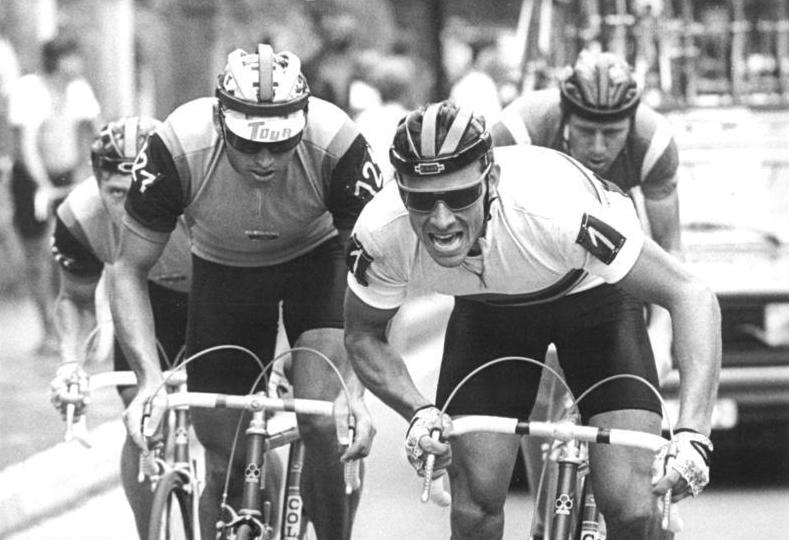
Cycling was in Uwe’s blood. His father, Klaus Ampler, had himself won the legendary Peace Race in 1963. It is hardly surprising, then, that young Uwe grew up with the bike as a natural part of life. Even in the youth categories in the former East Germany, he showed exceptional talent. He was not just “the son of a famous father” – he was a rider who knew how to win.
Champion’s mentality
While today’s stars dream of the Tour de France, for amateur cyclists in the 1980s the Peace Race was the ultimate prize. And it was here that Uwe Ampler carved his name indelibly into history. His breakthrough came in 1987. He arrived at the start as a strong rider, but not the number one favourite. Over the course of the race, however, he produced something special – a combination of dominance in the mountains and in the time trials. In one of the key stages, he attacked on the final climb and dropped the entire group of favourites. It was not just about physical strength – he made his move at exactly the moment the others hesitated. The result was overall victory, crowned by three stage wins and the mountains classification.
A year later, Ampler was no longer a surprise. He was the leader everyone watched. And yet he won again. This time, consistency was the key. It was not about one crushing stage, but about controlling the race day after day and limiting losses in the critical moments. On the flat stage to Banská Bystrica, where a bunch finish had been expected, Ampler found himself in the breakaway. Not because he had to, but because he wanted to keep the race firmly in his hands. That was his mentality.
The following year he completed a winning hat-trick. Three overall victories in a row – that was no longer a coincidence, but the era of Uwe Ampler. And 1989 was a historic turning point far beyond sport as well.
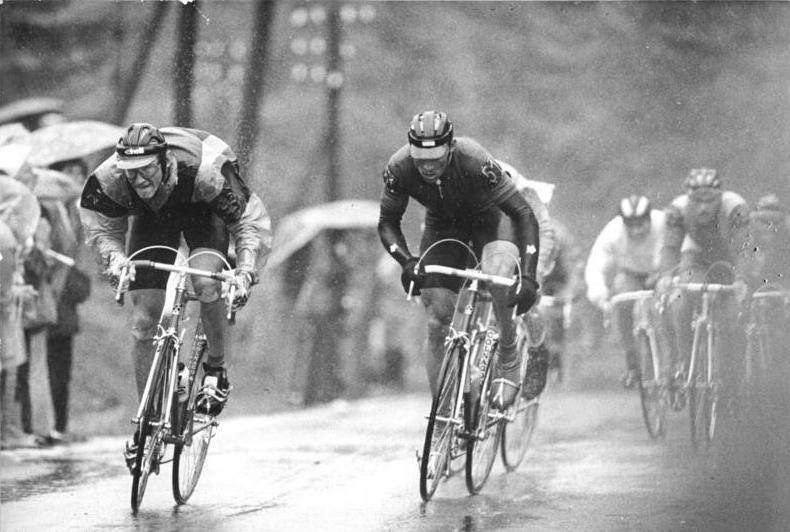
One of the stages, from Mladá Boleslav to Trutnov, was marked by terrible weather. Rain, cold and broken roads – exactly the kind of conditions where races are decided. Ampler did more than survive; he dominated. He built the decisive advantage there, and no one could pull it back.
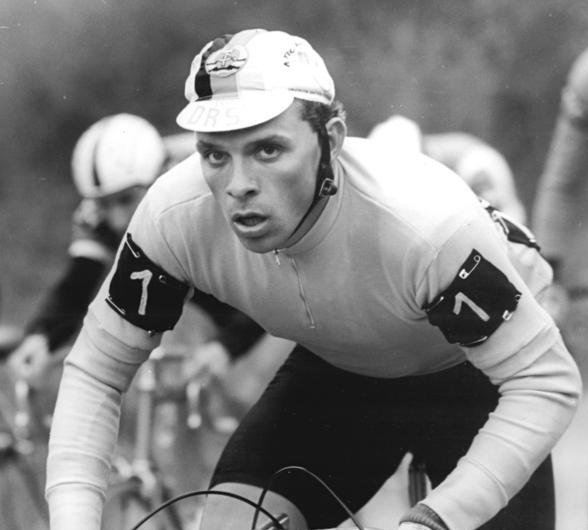
Ampler was not a showman. His greatest gift was his ability to read a race, prepare his tactics with precision, handle psychological pressure and time his attacks with deadly accuracy. He wore his rivals down gradually, but inevitably.
The Return of the King
After the fall of the Iron Curtain, the world opened up. Ampler turned professional and raced on the western circuit as well. He appeared in prestigious events, including the Tour de France. The transition, however, was not easy. A different system, a different peloton dynamic, different teams. He rode the Tour de France three times, the Giro twice and the Vuelta once. Yet he never managed to win a stage.
Later in his career, he returned to his roots. By 1998, the Peace Race was no longer what it had once been. The cycling world had changed. But Ampler came back. That year’s race featured stars such as Rumšas, Riis, Hondo and Poitschke. The veteran Uwe Ampler did not win a single stage – and yet, in the finish in Erfurt, he emerged as the overall winner.
He was no longer the dominant leader of the peloton, but a seasoned veteran who read the race masterfully. And his fourth Peace Race victory, almost a decade after the third, brought his career to a magnificent close.
Photos: Wikimedia Commons/Bundesarchiv/Jan Peter Kasper, Wolfgang Thieme, Heinz Hirndorf