In a world where the amateur cycling calendar was divided by the Iron Curtain, the Peace Race held an almost mythical status. And it was on that stage that a legend named Uwe Raab was born — a sprinter who could turn ordinary stages into an electrifying display of speed, tactics and instinct.
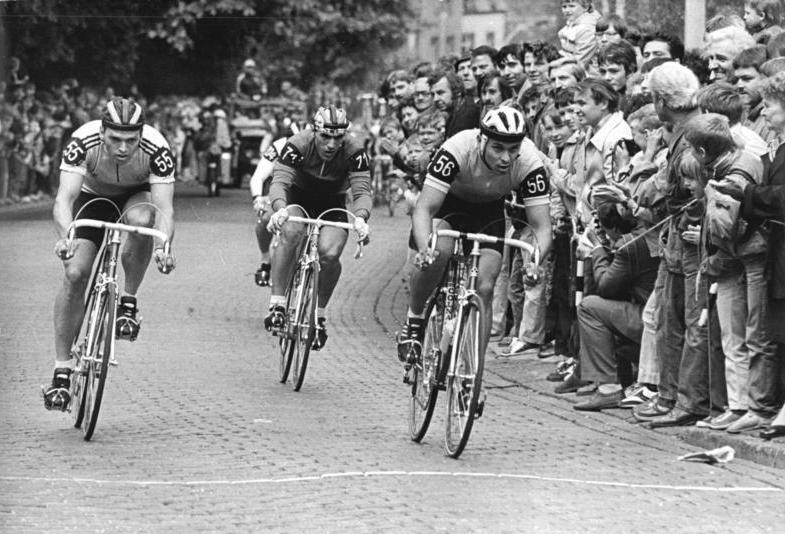
Born in Wittenberg in the former German Democratic Republic, the now 62-year-old won a total of eight stages at the Peace Race. He also spent eight stages in the yellow jersey as the overall race leader. Uwe Raab was not just another fast man on the start list. He was a phenomenon. In the 1980s, when the Peace Race represented the pinnacle of amateur cycling, his name appeared in the results sheets with almost monotonous regularity. Four overall victories in the points classification made him one of the defining faces of the race.
His style was easy to read — and yet impossible to stop. Perfect timing, an ability to read the peloton, and explosive acceleration in the final few hundred metres. While others waited for the ideal position, Raab knew how to create it for himself.
How he shaped the image of the Peace Race
The Peace Race had always been a symbol of collective spirit, but Raab brought individuality into it. He was a showman within a system that did not particularly encourage individualism. Every one of his sprints was a little story in itself — a drama that drew spectators to their television screens and lined the roads with anticipation.
For organisers and fans alike, he was a gift. He gave the race dynamism and tension. Uwe Raab showed that even the sprint stages could be the highlight of the programme. There were no illusions in the peloton. When the sprint approached, everyone knew exactly whom they had to watch. Raab was the rider you did not want sitting on your wheel in the final 200 metres.
Yet respect did not mean fear alone. Many riders admired his professionalism and consistency. He was not a gambler, but a precise tactician. His performances were never accidental — they were the result of systematic work and exceptional talent.
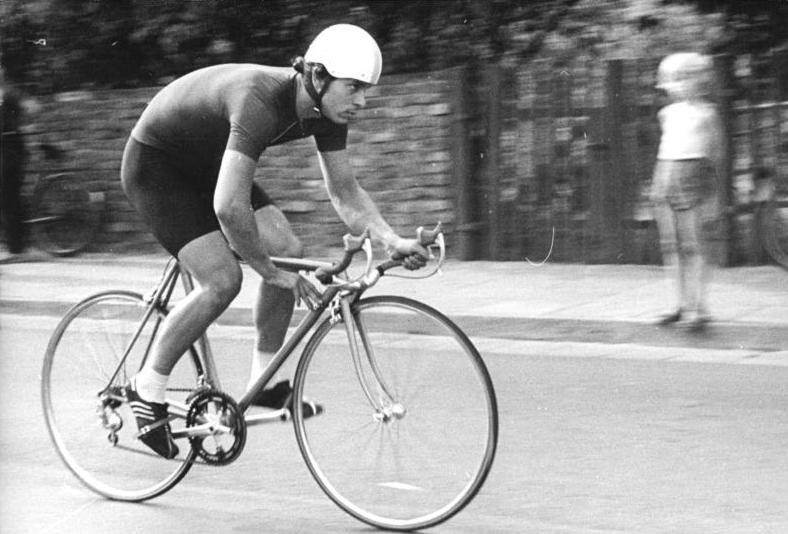
For Raab, the Peace Race was not just a string of victories. At a time of limited international opportunities, it was one of the few races where he could shine before a wider audience. His repeated success cemented his status as both a leader and a sprinting authority. The demands of tough stage races taught him how to manage energy and pressure. He became a name that resonated even beyond the borders of the Eastern Bloc.
The German rider’s domain was the pure sprint. It was not only about physical power, but about an ability to feel the race. He knew when to hide, when to launch and when to take risks. In an era before modern power meters and detailed data, instinct was his greatest weapon.
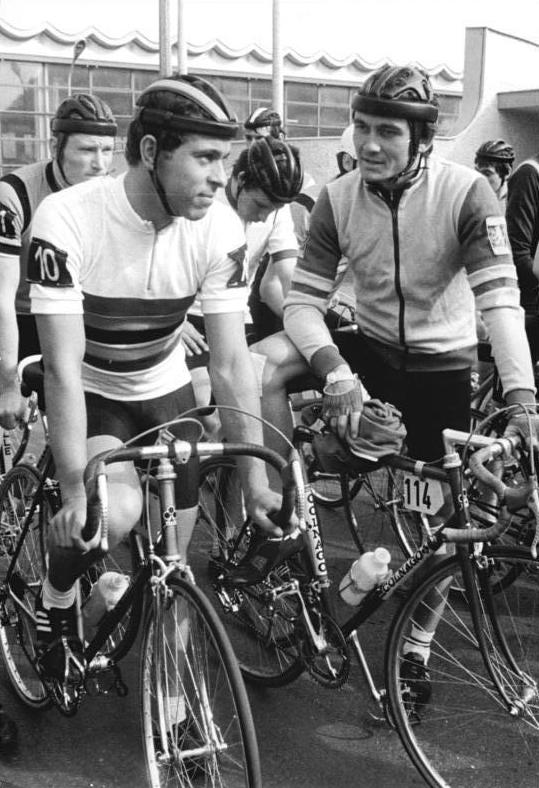
His success was also supported by the strength of the East German team, which was able to control the flow of stages and deliver him into the perfect position. But Raab still had to finish the job himself — and that was where he was second to none. When he won the individual world championship in 1984, he was voted Sportsman of the Year in East Germany, a remarkable honour.
After the fall of the Iron Curtain, the doors to the professional peloton opened. Raab moved into a world where sprinting meant facing names of a completely different calibre. Even so, he held his own.
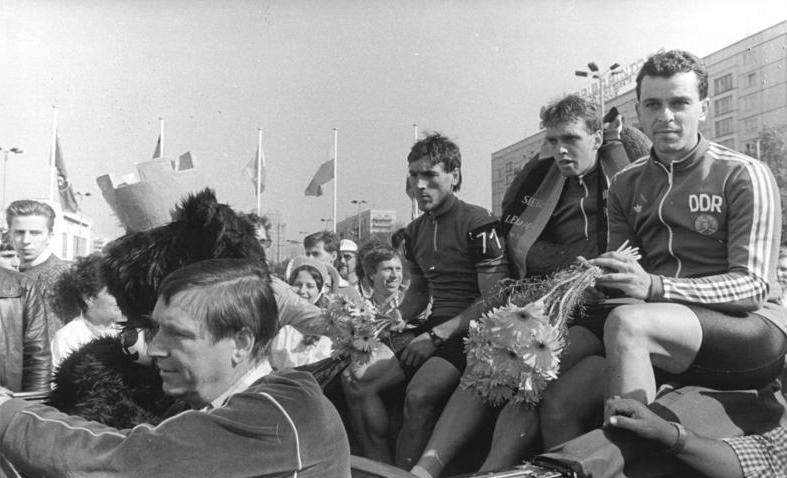
As a professional, he continued to win stages and proved that his talent was not simply the product of an isolated system. He may not have become a dominant star of the world peloton, but he did establish himself as a respected sprinter, capable of competing in fast finishes at the highest level.
He won four stages at the Vuelta a España, where he also twice claimed the overall points classification. He also took stage victories in prestigious races such as Tirreno–Adriatico, the Vuelta a la Comunidad Valenciana, the Vuelta a Burgos and the Vuelta a Asturias.
Photo: Wikimedia Commons/Bundesarchiv/Jan Peter Kasper, Rainer Weisflog, Gabriele Senft